What the Puritans Would Preach Today
Commentary
How many times have you heard or thought, “What would our spiritual forefathers think of the current state of the 21st Century Church?” Or for my friends abroad in the largely post-Christian culture of Europe, “Truly the reformers must be rolling over in their grave given the Romans 1-style ‘spiral of depravity’ on display. What message would the 17th Century Puritan ‘Redwoods of the western world’ have to say in such times? What specifically would their message be to the church if given the pulpit for just one sermon?
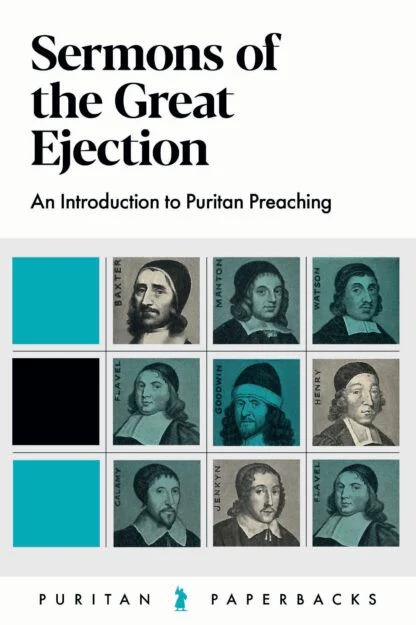
Well, look no further than “Sermons of the Great Ejection” to find out. Here the Banner of Truth brilliantly compiles the final sermons of seven great Puritan preachers to their flocks in 1662 during the “Great Ejection.” When put in its historical context, there are remarkable similarities between our church today and what the church in England experienced in the aftermath of what became known as ‘Black Bartholomew’s Day,’ when 2,000 preachers were ejected from their pulpits. Puritan Thomas Lye would describe this Ejection as “the greatest turn there ever was in England,” and after merely five short years following, J.B. Marsden harrowingly declared religion in the Church of England to be “almost extinguished.” So, what was the final message from these shepherds facing such tumultuous and uncertain times? Here is a taste of just three of the timeless themes for today:
The Heart of Man is the Same: In Edmund Calamy’s final sermon, he laments concerning the “strange kind of indifference and lukewarmness upon most people’s spirits” regarding religion. “So long as their trading goes on and their civil burden are removed,” they care not for the things of God. Friends, we should not be surprised at the utter indifference and apathy from the world today. The same heart that rejected the perfect light Who came into the world two thousand years ago, will continue to reject the truth without the miraculous work of the Holy Spirit.
Protecting the Truth Supersedes Church Unity: Far too many times I’ve heard Christians today say that “as long as we agree on the Gospel,” (whatever that even means) we can compromise on “secondary” truths of scripture. Yet like Charles Spurgeon’s response to the “Down-Grade” Controversy of 1887, Puritan John Collins attacks this logic directly when in his final sermon he warns that “if you believe anything the Scripture does not speak, your faith is diabolical. The Word of God and your faith must run parallel. All that is written you must believe, and you must believe nothing but what is written.” He goes on to make the compelling observation that “there never was anything of false doctrine brought into the church or anything of false worship imposed upon the church, but either it was by neglecting the Scripture or by introducing something above Scripture.”
God Will be Glorified by both the ‘Bright’ and ‘Dark’ Sides of the Clouds of Providence: Thomas Brooks takes his congregation back to not just the sovereignty of God over the affairs of man, but how He providentially orchestrates these things for the church’s good and His glory. Using the life of Joseph as an illustration, he says “Do not remember the beginning only, for that was the dark side; but turn to the latter end of him, and there was his bright side.” He concludes that “many sins, many temptations, and much affliction” would be prevented if Christians would equally rejoice in both sides of the cloud.
Thomas Lye concludes his sermon by confessing to his congregation: “I can truly say this: I have not spoken one word that I remember that I would not have said to you if I had been a-dying and called to go to God as soon as I had gone out of the pulpit.” Read the Puritans would highly encourage all believers in the church today to give an ear to these final words of men who, in the words of Richard Baxter, “preached as never sure to preach again, and as a dying man to dying men.”
Structure of the Book
The book contains transcripts of the ejection sermons of 7x Puritans while concluding with the Nonconformist’s Catechism:
Edmund Calamy – Trembling for the Ark of God (1 Sam. 4:13)
Thomas Brooks – A Pastor’s Legacies
John Collins – Contending for the Faith (Jude 3)
Thomas Lye – A Pastor’s Love for His People
Thomas Watson – Weal to the Righteous but Woe to the Wicked (Isa. 3:10, 11) & Parting Counsels (2 Cor 7:1)
John Oldfield – Stumbling at the Sufferings of the Godly (Psa. 69:6)
John Whitlock – Remember, Hold Fast and Repent (Rev. 3:3)
The Nonconformist’s Catechism
Five Key Quotes
"If the gospel be gone, our glory is gone." – Edmund Calamy
"Always make the Scripture, and not yourselves, nor your carnal reason, nor your bare opinion, the judges of your spiritual state and condition." – Thomas Brooks
"There never was anything of false doctrine brought into the church or anything of false worship imposed upon the church, but either it was by neglecting the Scripture or by introducing something above the Scripture." – John Collins
Be careful who you put before you as teachers, "Eve lost all she had by hearing one sermon." – Thomas Lye
“If the streams should fail, be sure you hold fast the fountain.” – John Whitlock
Recommended Complementary Reading
The Forgotten Spurgeon by Iaian Murray
All Things for Good by Thomas Watson
Preparations for Sufferings John Flavel
Where to Buy the Book
If you purchase the book through the following link, RTP gets a small percentage back which we will use to fund our operations. It’s costs nothing extra to you and you’ll be helping us connect the Puritans with Christ’s church worldwide.