The Art of Contentment
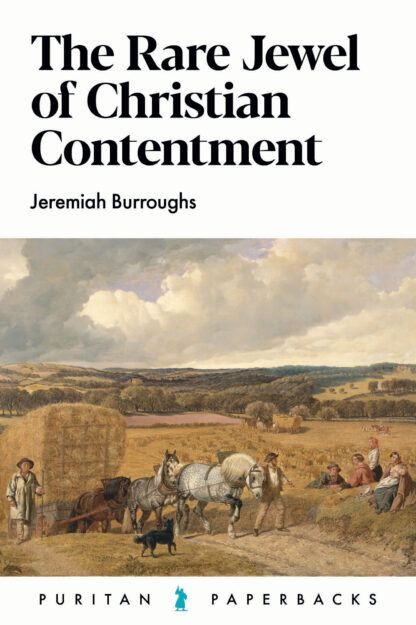
Commentary
Thomas Watson charged his congregation to “get good books in your houses,” for they are “cisterns that hold the waters of life in them to refresh you.” If good books are truly “waters of life” then Read the Puritans would argue that Jeremiah Burroughs’ “The Rare Jewell of Christian Contentment” is a Niagara Falls worth of living water, desperately needed to quench today’s dry and discontented souls.
It is astonishing that while our generation has experienced relative peace and stability unprecedented to those of our forefathers, we have simultaneously become the most “anxious” and “fearful” generation. One needs only to look at the best-selling books and advertisements of our day to see the rising trend in modern remedies to this ancient foe. Yet the issue is equally prevalent in Christian circles, with the rise of mental illness in the church begging the question “are Christians any different than the world?” I believe that an old voice from the past can shed some much-needed light on this “ancient path” of contentment and its immeasurable remedy for the conflicts of the soul.
Burroughs defines contentment as “that sweet, inward, quiet, gracious frame of spirit, which freely submits to and delights in God’s wise and fatherly disposal in every condition.” He spends much of his book unpacking the riches of this “precious ointment” which is “very comforting and useful for troubled hearts, in troubled times and conditions.” In his opening, he asserts that the attainment of this mystery is the “duty, glory and excellence of a Christian” and what sets us radically apart from the fallen world in which we live. Then in typical Puritan fashion, Burroughs surgically and methodically moves from the nature of contentment, to how Christ taught it, to its incalculable benefits, to the sin of discontentment, and finally concludes with some of the most practical advice on how to attain contentment.
Yet, what I found most compelling were Burrough’s “seven particulars” of the mystery of contentment. He writes that “without the understanding of these things, and the practice of them; you will never come to a true contentment in your life.” Hence, for the benefit of our readers, it is worth listing these seven ingredients (along with a corresponding Burrough’s summary quote) which serve as entry requirements to pass the “wicket gate” toward the celestial city of contentment.
A Christian is the most contented man in the world and yet the most unsatisfied man in the world
“Godliness teaches us this mystery, not to be satisfied with all the world for our portion, and yet to be content with the meanest condition in which we are.”
A Christian comes to contentment, not so much by way of addition, as by way of subtraction
“The world is infinitely deceived in thinking that contentment lies in having more than we already have. Here lies the bottom and root of all contentment, when there is an evenness and proportion between our hearts and our circumstances.”
A Christian comes to contentment not so much by getting rid of the burden that is on him, as by adding another burden to himself
“Burden your heart with your sin; the heavier the burden of your sin is to your heart, the lighter will the burden of your affliction be to your heart.”
It is not so much the removing of the affliction that is upon us as the changing of the affliction, the metamorphosing of the affliction, so that it is quite turned and changed into something else.
“It is the nature of grace to turn water into wine, that is, to turn the water of your affliction, into the wine of heavenly consolation.”
A Christian comes to contentment not by making up the wants of his circumstances, but by the performance of the work of his circumstances.
“And the truth is, I know nothing more effective for quieting a Christian soul and getting contentment than this, setting your heart to work in the duties of the immediate circumstances that you are now in.”
A gracious heart is contented by the melting away of your will and desires until they are the same as God’s will and desires; by this means we gain contentment.
“That is the excellence of grace: grace does not only subject the will to God, but it melts the will into God’s will, so that they are now but one will.”
The mystery consists not in bringing anything from outside to make my condition more comfortable, but in purging out something that is within.
“If those lusts that are within, in your heart, were got out, your condition would be a contented condition. These are the mysterious ways of godliness, that the men of the world never think of.”
It is fitting that I conclude this short review by quoting the pastoral exhortation in which Burroughs concludes his book: “Here is a necessary lesson for a Christian, that Paul said, he had learned in all states therewith to be content. Oh, do not be content with yourselves till you have learned this lesson of Christian contentment, and have obtained some better skill in it than heretofore.”
Structure of the Book
The book is broken down into 13 chapters flowing from the logic of orthodoxy to orthopraxy:
Christian Contentment Described
The Mystery of Contentment
The Mystery of Contentment – continued
The Mystery of Contentment – concluded
How Christ Teaches Contentment
How Christ Teaches Contentment – concluded
The Excellence of Contentment
The Evils of a Murmuring Spirit
The Evils of a Murmuring Spirit – concluded
Aggravations of the Sin of Murmuring
The Excuses of a Discontented Heart
How to Attain Contentment
How to Attain Contentment – concluded
Five Key Quotes
“All God’s strokes are strokes of love and mercy … grace enables men to see love in the very frown of God’s face, and so come to receive contentment.”
“If anything is cut off from the stream, he [the godly heart] knows how to go to the fountain, and make up all there … ‘The pipe is cut off,’ says God, ‘come to me, the fountain, and drink immediately’ … and it may be, that is the reason why your outward comforts are taken from you, that God may be all in all to you.”
“There is no condition that a godly man or woman can be in, but there is some premise or other in the Scripture to help him in that condition. And that is the way to contentment, to go to the promises, and get from the promise, that which may supply.”
“No soul shall ever come to heaven, but the soul which has heaven come to it first.”
“It is a miserable condition, my brethren, to depend altogether upon creatures for our contentment.”
Recommended Complementary Reading
Contentment, Prosperity, and God’s Glory by Jeremiah Burroughs
The Art of Divine Contentment by Thomas Watson
An Ark for All God’s Noahs by Thomas Brooks
Where to Buy the Book
If you purchase the book through the following link, RTP gets a small percentage back which we will use to fund our operations. It’s costs nothing extra to you and you’ll be helping us connect the Puritans with Christ’s church worldwide.