The Nature of Saving Faith
Commentary
One of the things that excites me most about the Puritans is their direct applicability to the spiritual battles of today. Jim “Chaos” Mattis, former Secretary of Defense and retired Marine General writes that “if you haven’t read hundreds of books, learning from others who went before you, you are functionally illiterate, and you will be incompetent, because your personal experiences alone aren’t broad enough to sustain you.” While written in the context of military strategy, this principle equally applies to the spiritual realm as most, if not all, of the errors or devices employed by Satan today are simply recycled tactics already addressed by those spiritual giants who came before us. The problem is quite simple; believers have either stopped reading or are reading in all the wrong places, leading to “functional illiteracy” when confronted with truth and error.
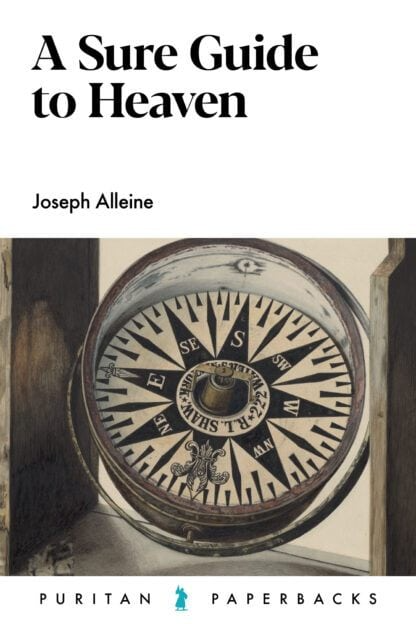
This is most clearly seen in this short Puritan Paperback by Jospeh Alleine titled “A Sure Guide to Heaven,” where Alleine lays out one of the most simplified yet biblically profound overviews of the doctrine of salvation. In this relatively short “lightweight” paperback (weighing in at just under 150 pages), Alleine succinctly describes the nature of saving faith by biblically defending its heart (motivation) and evidence (result). Ironically, nearly 400 years after Alleine, these biblical descriptions of salvation would receive the new labels of “Christian Hedonism” and “Lordship Salvation.”
In 1986 when John Piper published his most iconic book, “Desiring God: Meditation of a Christian Hedonist” he coined a new and slightly controversial expression known as “Christian Hedonism” to describe the nature of salvation. This term is best defined by his often-repeated phrase that “God is most glorified in us when we are most satisfied in Him.” Another words, the Christian’s true motivation behind faith is delighting in God, his highest source of joy and the only fountain that can satisfy the longing souls of the creature. One could argue that every Piper book or sermon since “Desiring God” is a branch or channel downstream of this overarching theme. Yet this “hedonistic” premise is certainly nothing new to the 1980s, listen to how Joseph Alleine describes the heart of saving faith: “Have you taken God for your happiness? … go into the gardens of pleasure, and gather all the fragrant flowers there … if God can make you happy, you must be happy; for you have taken the Lord to be your God.” It appears Christian hedonism was alive and well in 1671.
On the flip side of the motive behind salvation comes the evidence of saving faith. Most evangelicals are familiar with the “Lordship Salvation” controversy of the late 20th Century, where in 1991 John MacArthur’s most renowned book “The Gospel According to Jesus” responded to the errant claim that one can separate Christ as Savior and Lord. This unbiblical distinction, largely associated with Dr. James Boice and Dallas Theological Seminary, led to the potentiality for “carnal Christians” roaming the earth who while saved, had not yet submitted their lives to the Lordship of Christ. The “Lordship Salvation” campaign directly challenged this idea by biblically defending the reality that saving faith requires not only trusting Jesus as Savior but submitting to Him as Lord. John MacArthur spent much of his ministry arguing that this submission to the Lordship of Christ results in a life of obedience marked by progressive sanctification. Yet, once again, here we see key terrain which Alleine has already secured. Warning Christians about the destructive heresy of taking Christ as Savior and not Lord, he writes: “The unsound convert takes Christ by halves. He is all for the salvation of Christ, but he is not for sanctification … he divides the offices and benefits of Christ. Let him beware here … they divide what God has joined, the King and the Priest … the sound convert takes a whole Christ … the dominion of Christ as well as deliverance by Christ.”
By no means is the intent of this review to discredit the work and ministry of John Piper and John MacArthur or the battles they fought to proclaim and defend the gospel. I for one would not be the believer I am today were it not for these two great shepherds. However, the intent of this review is to show how rich and in tune the Puritans are to the truths and battles we think are “unprecedented” in our days. I’m convinced if we spent more time reading our Bible “with the saints” who have come before us, we would be better armed and equipped for our daily pilgrimage. As CS Lewis laments: “A great many of the ideas about God which are trotted out as novelties today are simply the ones which real Theologians tried centuries ago.”
Yet, beyond Alleine’s doctrinal clarity, what warms the heart of the reader in “A Sure Guide to Heaven” is his tenderness as a shepherd. Listen to his prayer for the reader: “Lord, put Thy hand upon the heart of this reader, and send Thy Spirit … and though I should never know it while I live, yet I beseech Thee, O Lord God, let it be found at the last day that some souls are converted by these labours; and let some be able to stand forth and say that by these persuasions they were won unto Thee.” Read the Puritans is convinced God is still answering Alleine’s prayer toward anyone privileged enough to crack open the timeless pages of “A Sure Guide to Heaven.”
Structure of the Book
The book is broken down into 7x primary chapters flanked by a biographical introduction and the author’s own introduction and conclusion.
Mistakes about conversion
The nature of conversion
The necessity of conversion
The marks of the unconverted
The miseries of the unconverted
Directions to the unconverted
The motives to conversion
Five Key Quotes
“Study your own hearts; do not rest till God has made thorough work with you; for you must be other men, or else you are lost men.”
“God finds nothing in man to turn His heart, but enough to turn His stomach.”
“Here is the root of man’s misery by the fall, he is turned aside to the creature, and gives that esteem, confidence, and affection to the creature that is due to God alone.”
“There is not surer evidence of an unconverted state than to have the things of the world uppermost in our aim, love, and estimation.”
“Till men are weary and heavy laden, and pricked at the heart, and quite sick of sin, they will not come to Christ for cure … they must see themselves as dead men, before they will come unto Christ that they may live.”
Recommended Complementary Reading
The Godly Man’s Picture by Thomas Watson
The Christian’s Great Interest by William Guthrie
Justification Vindicated Robert Traill
Where to Buy the Book
If you purchase the book through the following link, RTP gets a small percentage back which we will use to fund our operations. It’s costs nothing extra to you and you’ll be helping us connect the Puritans with Christ’s church worldwide.