True Pastoral Ministry
Commentary
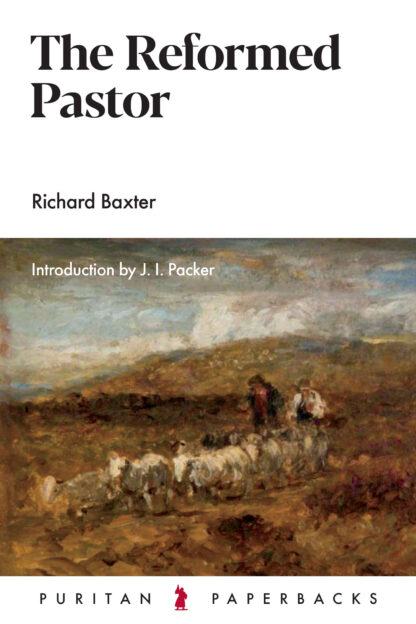
In 1656, Richard Baxter, minister of Kidderminster in Worcestershire, England, had a surprisingly novel take on pastoral ministry. It was his conviction that the pastor should be intimately familiar with those under his care and should be personally involved in ensuring their spiritual well-being. He was not concerned with church growth for the sake of numbers and was not concerned with building his own personal empire. Instead, he was concerned with the souls of the people in Kidderminster and made it his task to know every member of his church personally.
After a time, the other ministers in the area became convinced Baxter’s approach was biblical. They took to fasting and prayer and asked him to deliver a sermon regarding his philosophy and approach to pastoring. Thankfully, he was unable to deliver it and published it instead. This is how we came to hold the treasure that is The Reformed Pastor, a massive exposition of Acts 20:28: “Pay careful attention to yourselves and to all the flock, in which the Holy Spirit has made you overseers, to care for the church of God, which he obtained with his own blood.” (ESV)
Baxter first spends considerable time ensuring his peers, fellow ministers, are actually Christians. Later in the book, he goes so far as to say that, “the chief misery of the Church is that so many are made ministers before they are Christians.” He adds earlier in the discourse that, “many a preacher is now in hell” and exhorts them to “see that the work of saving grace be thoroughly wrought in your own souls.” It seems a strange thing that a minister of the gospel would not be an actual follower of Christ, the very author of the gospel. Unfortunately, this issue has probably increased in our time.
He next turns to the pursuit of knowledge. He agrees that knowledge is important: “nothing can be rightly known if God be not known.” However, he warns that this pursuit of knowledge can be premature. You can almost hear his cry to them when he says, “alas that we should have so many books in our libraries which tell us the way to heaven; that we should spend so many years in reading these books, and studying the doctrine of eternal life, and after all this to miss it!”
Assuming the pastor is a believer, Baxter then turns his attention to their sin: “Take heed to yourselves, for your sins have more heinous aggravations than other men’s … a teacher of others cannot commit a small sin.” He adds, “As you may render him more service, so you may do him more disservice than others. The nearer men stand to God, the greater dishonor hath he by their miscarriages.” Sadly, we are overrun with modern examples of this truth.
After exhorting them to look after their own souls, Baxter turns to their duties to see after the flock placed in their charge. He very quickly addresses something near and dear to modern day evangelicalism: church size. Baxter is clearly against the idea of large congregations. He says, “when we are commanded to take heed to all the flock, it is plainly implied, that flocks must ordinarily be no greater than we are capable of overseeing.” He quickly adds, “If the pastoral office consists in overseeing all the flock, then surely the number of souls under the care of each pastor must not be greater than he is able to take such heed to as is here required.” As though his point is not clear enough, he poses a logical question: “We should know every person that belongeth to our charge; for how can we take heed to them if we do not know them?” Expanding on his premise that the pastor should know everyone under his care, Baxter writes much about the private, one-on-one catechizing of the congregation. In other words, he sees massive value in ensuring each member of the flock knows the doctrines of his or her faith and he sees this as the pastor’s duty. This is not something to be delegated in his mind. He also addresses their manner of preaching, which goes against much of what we see in the church today: “I hate that preaching which tends to make the hearers laugh, or to move their minds with tickling levity, and affect them as stage-plays used to do, instead of affecting them with a holy reverence of the name of God.”
Baxter’s book challenges much of the modern philosophy of pastoral ministry and presents what seems to be foreign in the church today. This is a good and much needed thing. Our perspectives need to be shaken. Years ago, I had the privilege of visiting an underground house church in Indonesia. Each week, the congregation shows up early to help put the church back together because it is vandalized by the community. After a couple of hours, they begin their service where they sing in a whisper and listen diligently to the Word being taught for much longer than we are used to in America. Their appetite for the truth is insatiable. Is our appetite for truth insatiable? When they pray, they pray for us here in America. Think about that for a second. A church body that experiences real persecution, not the trivial things we sometimes call persecution, prays for our churches here. Why? Because they see the disparity and so did I when I was there. I’ve never once set foot in a church in America that was like that. Many in the American church ascribe to easy-believism and lack the necessary Lordship of Christ in their lives. This is what Baxter was aiming at. He wanted to ensure this sickness in the body was not possible in his church. That’s why his fellow pastors saw the positive effects and took to the same strategy. That is why the church in Indonesia was different. Believing isn’t easy there. We would be much better off here if the pastors took the time and risked the confrontation to ask difficult questions of those under their charge. Are you a pastor? Make sure your people know Christ! Avoiding confrontation, when it is necessary, is not loving your people.
In closing, it is my opinion that this book should be handed out to every seminary student and at every pastor’s conference. If you are a pastor, this should be a yearly read. If you are not a pastor, buy two copies. Read one yourself and gift the other to your pastor.
Structure of the Book
The book is divided into 3 chapters, each with multiple sections:
The Oversight of Ourselves
The Nature of this Oversight
The Motives of this Oversight
The Oversight of the Flock
The Nature: This Oversight Extends to All the Flock
The Manner: The Ministerial Work Must Be Carried On
The Motives of this Oversight
Application
The Use of Humiliation
The Duty of Personal Catechizing and Instructing the Flock Particularly Recommended
Five Key Quotes
"Preach to yourselves the sermons which you study, before you preach them to others."
"A minister is not to be merely a public preacher, but to be known as a counselor for their souls."
"Our whole work must be carried on under a deep sense of our own insufficiency."
"He preacheth not heartily to his people, that prayeth not earnestly for them."
"Amidst all your studies, be sure to study humility."
Recommended Complementary Reading
The Art of Prophesying and the Calling of the Ministry by William Perkins
A Sermon Concerning Catechising of Youth by Matthew Henry
A Sermon Concerning the Work and Success of the Ministry by Matthew Henry
Gospel Evidences of Saving Faith by John Owen
Knowing the Heart: Jonathan Edwards on True and False Conversion by Jonathan Edwards
Where to Buy the Book
If you purchase the book through the following link, RTP gets a small percentage back which we will use to fund our operations. It’s costs nothing extra to you and you’ll be helping us connect the Puritans with Christ’s church worldwide.