The Spiritual Art of War
Commentary
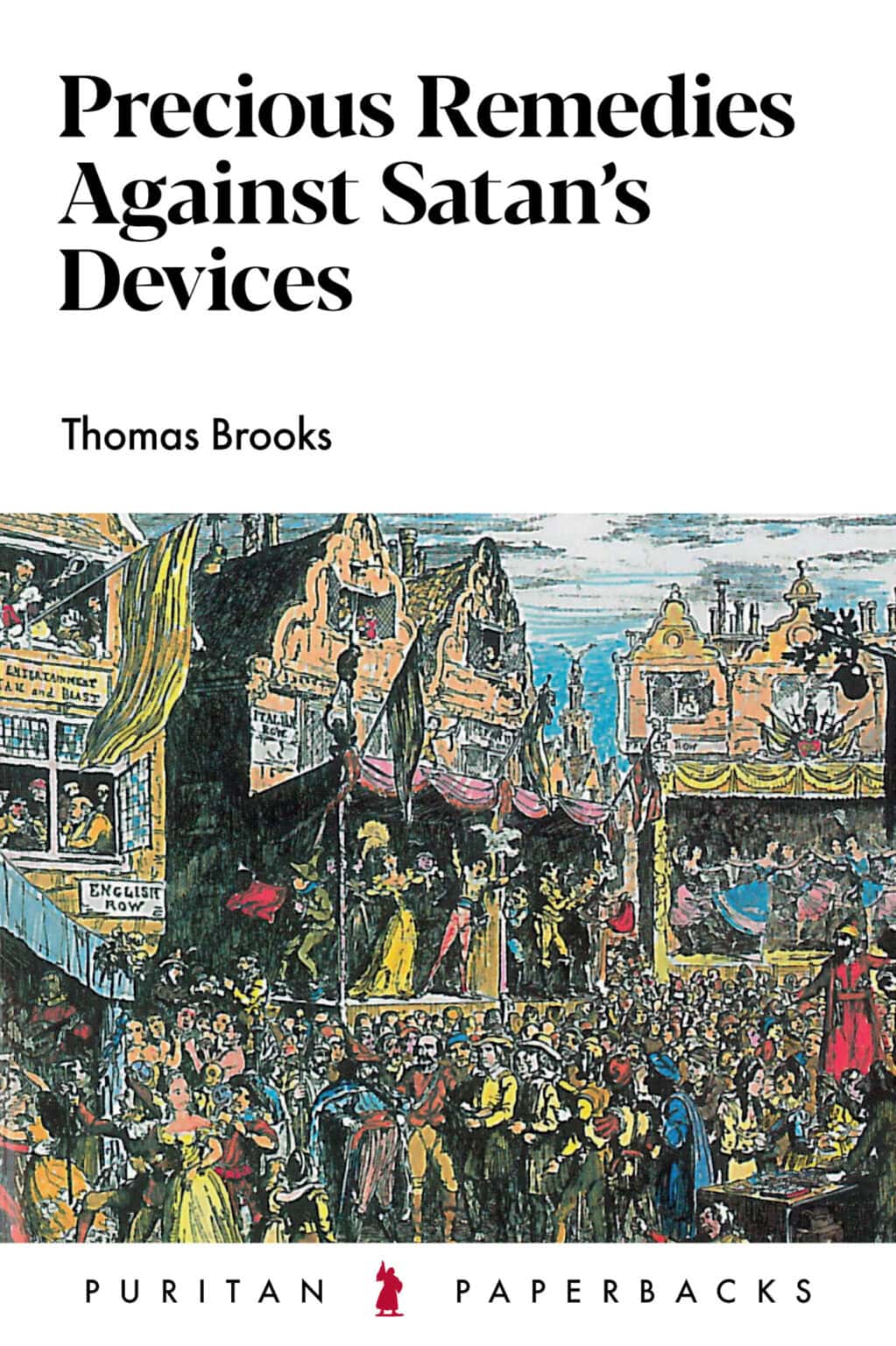
The one book that Charles Spurgeon famously kept by his bedside was Thomas Brooks’ Precious Remedies Against Satan’s Devices. We could end the review there and simply conclude that if this book was so vital to the beloved “prince of preachers” then surely it belongs at a very minimum on your bookshelf. But we can’t stop there, for what Read the Puritans lists as one of the top-10 essential Puritan books deserves a solid (albeit brief) review.
If I could rename Precious Remedies, I would title it “The Spiritual Art of War.” As a military planner, I’ve read and applied countless theorists from the likes of Sun Tzu, Clausewitz, Jomini, Moltke, Hart, Boyd, etc. Hence, what I found so fascinating about Brooks is just how similar this book reads compared to the strategic guidance offered by many of these men.
For example, listen to what Sun Tzu writes about knowledge of yourself and your adversary: "If you know the enemy and know yourself, you need not fear the result of a hundred battles.” He goes on to write that if you know only one of the two, you’ll find success about half of the time, while failure to know either almost always results in failure. This principle is precisely where Brooks begins Precious Remedies by charging Christians to know themselves by discovering the “fullness of Christ” and “emptiness of the creature,” while at the same time, becoming intimately familiar with “the snares of the great deceiver.” How many Christians today would be spared myriad spiritual defeats if they disciplined themselves to daily consider the depths of their own hearts, the beauty of Christ & His promises, and the schemes of the adversary? Listen to how Brooks applies our familiarity and communion with Christ against one particular device of Satan: “Is not he [Christ] the crown of crowns, the glory of glories, and the heaven of heavens? Oh then, be still a-longing after a full, clear, and constant enjoyment of Christ in heaven; for till then, Satan will still have plots and designs upon you.”
Another renowned military theorist is the great Prussian Carl von Clausewitz. In his famous “On War” he writes that while the nature of war always remains the same, the character of war, like a chameleon, is always evolving. The implication is that to be successful, one must always re-evaluate what “kind” of war is being fought, knowing that the character of the conflict is changing over time. This reality is what precipitated von Moltke the elder (another dead Prussian) to famously write “Kein Plan überlebt den ersten Kontakt mit dem Feind” or “no plan survives first contact with the enemy.” This reality is precisely what Brooks is continually emphasizing throughout Precious Remedies when he describes how Satan is always adapting his strategies, at times even using the most mundane and neutral means to entrap believers in sin: “This world, this wilderness, is full of snares … there are snares about our tables and snares about our beds; yea, Satan is so powerful and subtle that he will oftentimes make our greatest, nearest, and dearest mercies to become our greatest snares.” I’ve seen this countless times in my own life where even the good things like family, church, ministry, and even dare I say the word of God itself, have become their own self-serving “snares” against me, feeding my “idol-factory” prone heart. I love how Brooks closes his book with a warning that this conflict will never cease until the day when believers receive their ultimate rest: “He [Satan] acts by an untired [relentless] power, and will never let you rest till you are taken up to an everlasting rest in the bosom of Christ.”
Finally, as an antithesis to the changing character of war, Antoine Henri Jomini, the Swiss strategist who lived in the same era as Clausewitz, identifies those unchanging and fundamental principles of war, boiling warfare down to a timeless scientific approach. In fact, much of what he writes in his own version of the “Art of War” has become the modern doctrinal framework used by the US Military to this day. Yet remarkably, Brooks is also very “Jominian” in his approach as well, codifying proven and timeless stratagems for the Christian’s war against the “unholy” trinity of self, the world, and Satan. Brooks is surgical, describing 38 timeless adversarial devices while prescribing no less than196 tactical remedies for the believer to add to his arsenal. No wonder the Puritans were originally called the Precisionists. At the risk of violating my own desire for brevity, I think an example of one of Brooks’ “precision-guided counseling” would be most helpful here. In Section 4, “Satan’s Devices to Keep Saints in a Sad, Doubting, Questioning and Uncomfortable Condition,” look at Brooks’ strategy against just one of eight common devices I’ve witnessed countless times in the church today:
Device #7: Satan reminds the saints of their “frequent relapses into sin formerly repented of and prayed against” (ever felt this attack?)
Remedies:
1) Many scriptures show that such relapses have troubled saints
2) God nowhere promises that such relapses will not happen
3) The most renowned of glorified saints have, on earth, experienced such relapses
4) Relapses into enormities must be distinguished from relapses into infirmities
5) Involuntary and voluntary relapses must be distinguished
6) No experience of the soul, however deep or high, can in itself secure the soul against relapses
As an aside, for those who are fans of CS Lewis’ The Screwtape Letters, the fictional account of a senior demon’s correspondence with his apprentice, I would not be surprised in the least if Lewis borrowed from Precious Remedies to inform the demonic strategy of his principal characters. The are many similarities between the two.
And finally, as is common with the Puritans, it is fitting to end this review with where Brooks began his book in reiterating his pastoral concern for the reader. Read the Puritans echoes the urgency and shepherding plea of Brooks when he pens these introductory words: “Not knowing how soon my glass may be out … when I put off this earthly tabernacle … I shall leave this book with you as legacy of my dearest love, desiring the Lord to make it a far greater and sweeter legacy than all those carnal legacies that are left by the high and mighty ones of the earth.” May you pick up this “Spiritual Art of War” and may it be to you an enormous means of grace as you wage war and in the words of another Puritan named Thomas, “take heaven by storm.”
Structure of the Book
The book is divided into four categories of Satan’s devices followed by an appendix listing the characteristics of false teachers:
“The Proof of the Point” or why this book is so necessary
Satan’s Devices to “Draw the Soul to Sin”
Satan’s Devices to “Keep Souls from Holy Duties”
Satan’s Devices to “Keep Saints in a Sad, Doubting, Questioning and Uncomfortable Condition”
Satan’s Devices to “Destroy and Ensnare All Sorts and Ranks of Men in the World”
APPENDIX: Five More Devices and Seven Characteristics of a False Teacher
Five Key Quotes
“It is not he that reads most, but he that meditates most, that will prove the choicest, sweetest, wisest and strongest Christian.”
“Never let go out of your minds the thoughts of a crucified Christ. Let these be meat and drink unto you; let them be your sweetness and consolation, your honey and your desire, your reading and your meditation, your life, death, and resurrection.”
“David fails fearfully, but by repentance he rises sweetly … as once his faith was so great that he leapt, as it were, into a sea of waters to come to Christ; so now his repentance was so great that he leapt, as it were, into a sea of tears … Ah, souls, you can easily sin as the saints, but can you repent with the saints?”
“It is mercy that our affliction is not execution, but a correction.”
“Though thy sun for the present be clouded, yet he that rides upon the clouds shall scatter those clouds, and cause the sun to shine and warm thy heart as in former days.”
Recommended Complementary Reading
“Mortification of Sin” by John Owen
“Heaven Taken by Storm” by Thomas Watson
“The Holy War” by John Bunyan
Where to Buy the Book
If you purchase the book through the following link, RTP gets a small percentage back which we will use to fund our operations. It’s costs nothing extra to you and you’ll be helping us connect the Puritans with Christ’s church worldwide.