
This is the third edition of our Pastors on the Puritans series where we interview current pastors on their perspective of the Puritan writings and how they and their ministries have been influenced by the Puritans. In this edition, we interview Pastor Paul Lamey from Grace Community Church in Huntsville, Alabama. Enjoy.
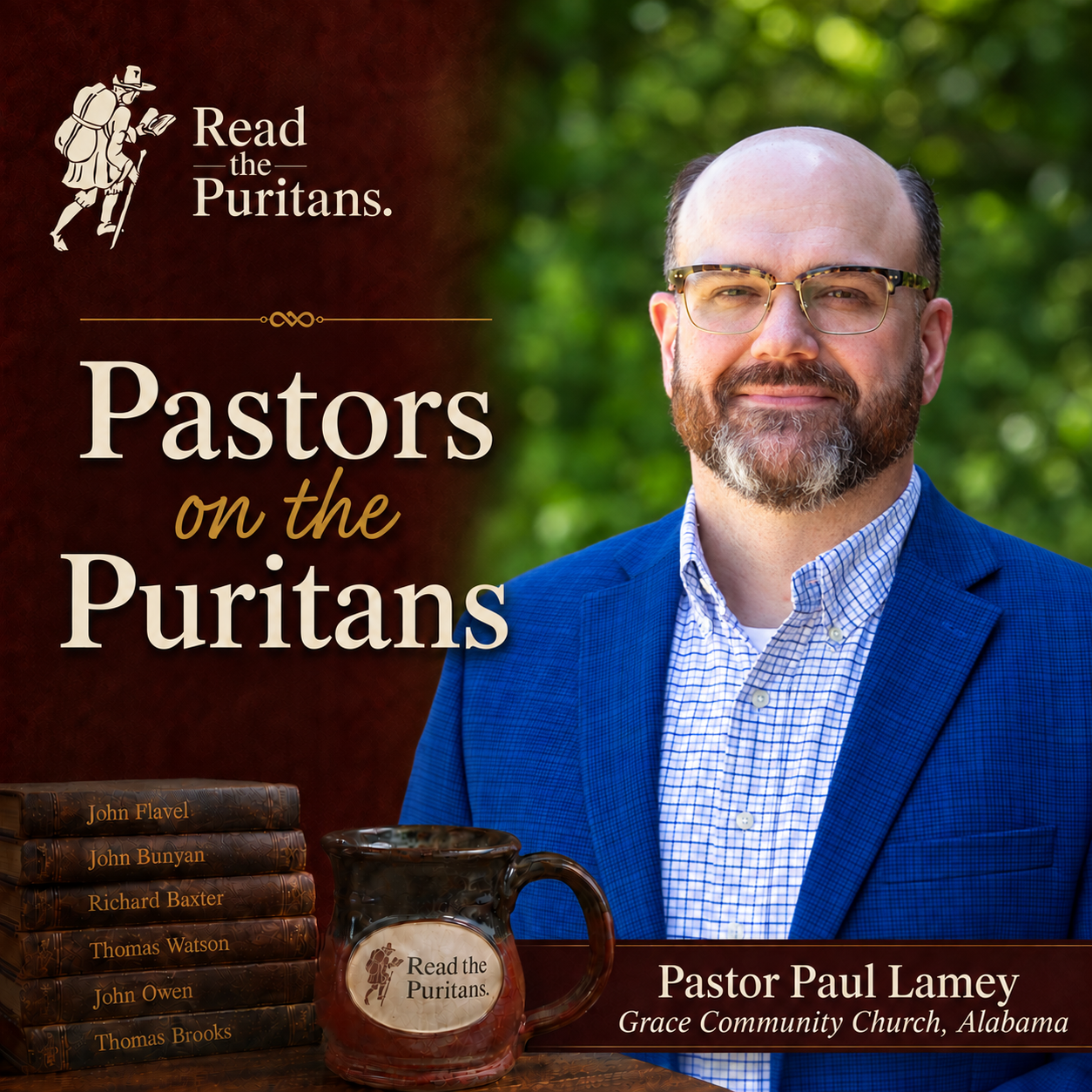
A Conversation with Pastor Lamey
A brief bio:
Paul Lamey has served as the Pastor-teacher of Grace Community Church in Huntsville, AL since 2002. He is a graduate of The Master’s Seminary (MDiv, Dmin) and has trained pastors at The Expositors Seminary for over a decade. Paul and his wife, Julie, have four children and are soon to be grandparents.
How did you first discover the writings of the Puritans?
As a young man, I read J. I. Packer’s Knowing God. He’s obviously not a Puritan, but he may be the biggest reason so many of us know about and read the Puritans. Providentially, Phil Newton, a now retired pastor who faithfully served his church for many decades, was a significant catalyst in leading me to the Puritans. When I was in college, our paths crossed and he became a gateway to me for exploring the Puritans. Knowing that I was thinking about pastoral ministry, he gave me a copy of Richard Baxter’s The Reformed Pastor. The rest, as they say, is history.
What was the first Puritan book you read?
I first read The Reformed Pastor by Baxter, and then subsequently devoured the Banner of Truth Puritan Paperback series.
What is your favorite Puritan book? Why?
There are a number that are prominent in my mind and spiritual pilgrimage. The Bruised Reed by Sibbes and The Godly Man’s Picture by Watson are wonderful, accessible, and warmly encouraging on many levels.
Who is the Puritan who has impacted you the most? Why?
Early on, it was Baxter but then John Owen became a significant force in theological depth and impact.
Do you think Christians should read the Puritans? Why?
Yes! They drank from the inexhaustible well of Scripture and constantly considered all the ways in which the Christian life is nourished by such living water. There are few subjects important to believers that are not covered by these giants.
What is the latest Puritan book you’ve read?
John Flavel’s Keeping the Heart which is an extended meditation on Proverbs 4:23.
Have the Puritans had a positive influence on your own sanctification? What about your ministry?
It was not until, as a young man, reading Watson’s The Doctrine of Repentance that I truly understood the depths of what repentance means. Watson helped me understand and apply passages like Psalms 32; 51; 119:25–32.
What do you think sets the Puritans apart from what we see on Christian bookshelves today?
Many of the Puritans suffered and some even died for what they preached and wrote about. There’s not much written today that carries that same kind of weight and gravitas. While some of the Puritans could lean in the direction of morbid introspection—especially their heirs (e.g., David Brainerd, William Cowper), much of today’s Christian writing contains no introspection at all. Writers today are seemingly afraid to address the Christian life with the imperatives of Scripture.
If a person in your church asked you what the first Puritan book they read should be, what would you recommend and why?
Almost anything by Thomas Watson. I believe he’s one of the most clear, accessible, and warmest of the Puritans.
In the Lord’s providence, we met Pastor Lamey at the Walking Worthy Conference where he was one of the main speakers. We were blessed not only by his message but just the sweet fellowship and conversation with this brother. He graciously agreed to answer these questions for us and we hope you are blessed by getting to know another faithful pastor. Please join us in praying for Pastor Lamey and the congregation he shepherds at Grace Community Church in Huntsville.