Godly Fear: the Antidote to Anxiety
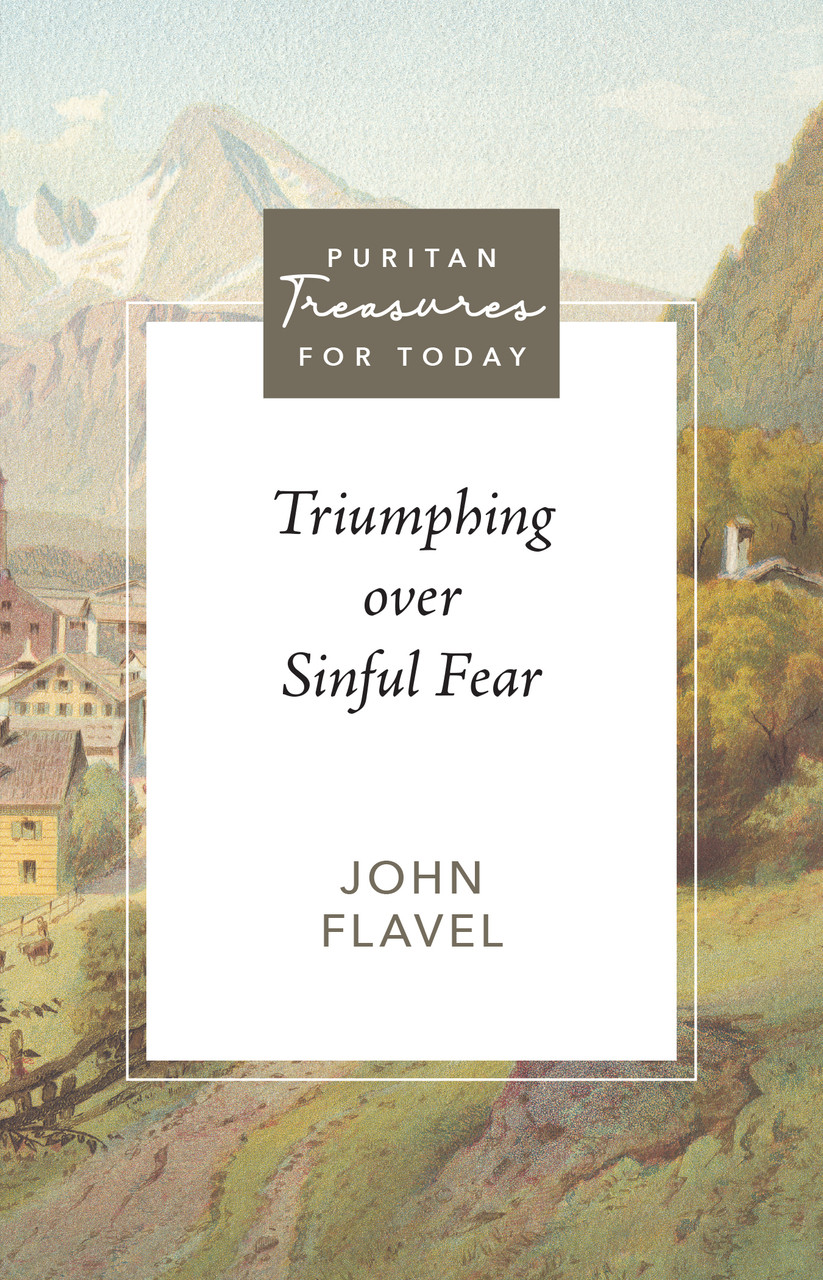
Commentary
There’ve been moments in my life where I’ve been absolutely paralyzed by fear; the feeling of my heart rate rising rapidly, breathing becoming shallow, muscles tense, body stuck in a “fight or flight” response, and an overwhelming sense of impending doom. The Puritan John Flavel puts it best when he writes: “There is scarcely a greater tormenter in the world than for a person to be his own tormentor and for his mind to be an engine of torture to his body.” I used to be my own grand tormentor, echoing David in Psalm 13:2 when he asks, “How long must I take counsel in my soul and have sorrow in my heart all the day?”
So, what’s the prescription for this kind of fear? After all, we are said to be living amid an epidemic of fear and anxiety.
The first thing Flavel does in this short book is define terms. This is important because as we will see, not all fear is created equal.
Flavel writes there is a “threefold fear” in humanity: natural, sinful, and religious.
1. Natural Fear: That God-given instinct when we perceive approaching danger or trouble. This has saved my life countless times in the military. Flavel observes that this fear “is not always sinful, but it is always the fruit and consequence of sin.”
2. Sinful Fear: We’re going to anchor down here for a bit because this is where the battle lies. Flavel writes that this kind of fear is “not only our unhappiness, but our fault.” Ouch.
Its sinfulness lies in five things:
1. Its Cause: Ultimately, it is caused by unbelief and distrust in God. I know that may sting if you’re struggling with anxiety or fear, but as Flavel writes, the less your faith, the more your fear: “If we were to rely upon God’s promises (so far as He enables us to believe), we would reckon ourselves to be very secure.” Or as Michael Reeves writes, “Anxiety grows best in the soil of unbelief.”
2. Its Excess: This fear is nearly impossible to keep under control, and it has a propensity to elevate the threat well beyond reality.
3. Its Inordinacy: This one hit close to home. Flavel points out that this sin elevates the creature and gives it “ascendancy” over us. Another words, we make ourselves slaves of the creature as if it has ultimate dominion and sovereignty over us.
4. Its Influence: This kind of fear negatively affects our family relationships, work or employment, and most importantly our ability to use the means of grace (prayer, meditation, reading or listening to the word). There was a time in my life when I found it hard to even sit down and read a book, much less pray.
5. Its Power: This fear leads us toward ungodly means as an escape (Prov. 29:25a). Look no further than Abraham who brought discredit upon God when he lied about Sarah (Gen. 20:9). For me it meant looking to the wisdom of the world (psychology, self-help books, medicine, etc.) as the primary means of deliverance. Nothing necessarily wrong with using worldly means of help, but the problem is I turned from ultimate trust in my Father, to trust in His creation.
So, once again, what’s the remedy for this kind of sinful fear?
The problem as Flavel argues is that “all the skill in the world cannot cure us of the disease of fear.” Quite the blow there to modern psychology. Ultimately, he asserts that the only remedy is to exchange this ungodly fear, which causes us to turn away from God, and substitute it with a third kind of fear which causes us to fall toward God. “Mark it,” John Bunyan writes, “here are two fears: a fear forbidden and a fear commended.”
3. Religious Fear: Flavel defines this kind of fear as “a gracious habit or principle planted by God in the soul, whereby the soul is kept under a holy awe of the eye of God, and from thence is inclined to perform and do what pleases Him, and to shun and avoid whatever He forbids and hates.” He describes it as “our treasure, not our torment … the chief ornament of the soul … natural passion sanctified – changed and baptized into the name and nature of a spiritual grace.” John Murray describes it simply as “the soul of godliness,” one that is the ultimate expression of our affectionate love toward God. And unlike living in the fear of man, which is one of the worst judgments (Deut. 28:65-67), this fear of God is one of the sweetest mercies a believer can know (Prov. 23:17).
Listen to these juxtapositions:
The fear of man shortens our days, but the fear of God prolongs them (Prov. 10:27)
The fear of man is a fountain of mischief and misery, but the fear of God is a fountain of life (Prov. 14:27)
The fear of man causes people to run to evil (Prov. 29:25), but the fear of God causes them to depart from evil (Prov. 16:6).
Flavel concludes that the only way to overcome ungodly fear and anxiety is by exalting the Lord of Hosts and making Him your fear. He offers 12 compelling rules to help you foster and grow in this kind of fear, knowing that ultimately the Holy Spirit is the decisive Enabler.
Buy the book if you’d like to read these 12 remedies in addition to an excellent concluding chapter answering some objections concerning suffering, depression, assurance, and perseverance.
In the end, we all must ask ourselves, “what kind of fear am I living under today?”
Structure of the Book
The book is divided into 7 chapters:
Introduction
Types of Fear
Uses of Fear
Causes of Sinful Fear
Effects of Sinful Fear
Remedies for Sinful Fear
Objections Answered
Five Key Quotes
“Our fear magnifies and exalts the creature, putting it (as it were) in God’s room and place … fear exalts people and belittles God.”
“There is a holy and laudable fear, which is our treasure, not our torment. It is the chief ornament of the soul.”
“Living night and day in the fear of man is one of the worst judgments (Deut. 28:65-67), but living ‘all the day long’ in the fear of God is one of the sweetest mercies (Prov. 23:17).”
“There is scarcely a greater torment in the world than for a person to be his own tormentor and for his mind to be an engine of torture to his body … the more you trust God, the less you will torment yourself.”
“Nothing is better for us than to resign our reason to faith, to see all things through the promises, and to trust God over all events.”
Recommended Complementary Reading
The Fear of God by John Bunyan
Gospel Fear by Jeremiah Burroughs
Rejoice and Tremble: the Surprising Good News of the Fear of the Lord by Michael Reeves
Where to Buy the Book
If you purchase the book through the following link, RTP gets a small percentage back which we will use to fund our operations. It’s costs nothing extra to you and you’ll be helping us connect the Puritans with Christ’s church worldwide.